Silica Fume In Hardened Concrete

Silica Fume Reduces Permeability

In many situations, the durability of concrete is directly related to its permeability. The contribution of silica fume is to reduce the permeability of the concrete. By reducing the permeability, the time is extended to prevent any aggressive chemical to get into the concrete where it can do its damage. Here are a few examples of how reducing permeability is used in actual structures.

Chloride damage to reinforcing steel:

Corrosion of reinforcing steel is the most significant and costly cause of concrete deterioration. It doesn’t matter whether the chloride comes from the ocean or from deicing salts, the results are the same. Silica-fume concrete is used widely in applications where the concrete is exposed to salt from any source. The reduced permeability of this concrete can result in many years of extended life for a structure.

Corrosion damage in concrete is a multi-step process as follows:

  1. The chloride ions slowly work into the concrete to reach the level of the reinforcing steel. Once a certain amount of chlorides, called the threshold amount, reach the steel, corrosion begins.
  2. As the iron ions are removed from the reinforcing steel, they go through several stages of oxidation or rusting. The volume of the iron increases with each stage.
  3. As the amount of rust increases, rust stains will be seen on the surface of the concrete. Next, cracking will be seen. Finally, the cracking will result in delaminations and spalling of concrete over the reinforcing steel.

Sulfate attack:

While the chemistry of the portland cement used plays a role in sulfate attack, it has been shown that the water-cementitio us materials ratio (w/cm) is also a critical factor. Reducing the w/cm effectively reduces the permeability of the concrete. Adding silica fume will further reduce the permeability resulting in further delays of any adverse reactions.

Acid or other chemical attack:

The overall resistance of silica-fume concrete to attack by an aggressive chemical is not significantly different from that of conventional portland cement concrete. However, the reduced permeability of silica-fume concrete may extend the life of a concrete structure or extend the time between repairs simply by slowing down the rate of the attack. If protection against a particular chemical is required on a project, we strongly urge testing to include exposure of specimens of varying silica fume contents to the particular chemical.

The reduction in permeability is not the only contribution of silica fume to durability. There is ample evidence that silica fume, when used alone or in conjunction with a suitable fly ash, can reduce or eliminate the potential for alkali-aggregate reaction when reactive aggregates are used. Again, testing will be required to determine the appropriate amount and types of cementitious materials to be used for each particular application.

Finally, the higher strength of silica-fume concrete will add additional abrasion resistance. For concrete made with a particular aggregate, the higher the compressive strength, the higher the abrasion resistance. High-strength silica-fume concrete has been used in applications such as trash transfer stations and stilling basins in major dams.

Advantages in Various Applications

Another way to look at the use of silica fume is from the viewpoint of constructability. Here, we are actually stepping across the boundary between effects on fresh and hardened concrete to take advantage of all aspects of the performance of silica-fume concrete to make construction easier or, in some cases, even possible. Here are a few examples:

  • One-pass finishing: In this case, we are taking advantage of the lack of bleeding in silica-fume concrete to complete finishing of flatwork in a single, continuous operation. The owner will get a better surface and the contractor will be able to complete the finishing in a shorter time using fewer finishers.
  • Reduced heat of hydration: Although silica fume contributes about the same amount of heat of hydration as does portland cement on a pound-for-pound basis, its strength contribution is much greater on the same basis. Therefore, by balancing portland cement and silica-fume in a mixture, heat of hydration can be reduced while strength is maintained.

More and more state DOTs are using combinations of silica fume and fly ash to reduce the heat of   hydration  for concrete used in bridge decks. Reducing the total amount of cementitious material will reduce heat and help prevent early-age cracking.

  • Use of three cementitious materials:There is an ever-increasing emphasis on using more waste materials such as fly ash and slag in concrete. However, the early age strength of concrete may suffer as a result. Adding small amounts of silica fume can offset this reduction in early strength. Usually, using combinations of three cementitious materials will reduce the cost of concrete. Mixtures containing three cementitious materials are referred to as “ternary mixtures”.
  • Shotcrete:Silica-fume shotcrete is being widely used, in both the wet and dry processes and with and without steel fibers. The cohesive nature of this shotcrete allows for many applications that would have been difficult, uneconomical, or impossible to accomplish without the silica fume.

REFERENCES

Information provided by US DEPARTMENT OF TRANSPORTATION –Federal Highway Administration –Silca Fume Association -April 2005


Silica Fume In Fresh Concrete

Silica Fume In Fresh Concrete
Increased Cohesion

Fresh concrete made with silica fume is more cohesive and therefore less prone to segregation than concrete without silica fume. To offset this increased cohesion when placing, silica-fume concrete is typically placed at 40 to 50 mm greater slump than concrete without silica fume in the same placement.

The main benefit from increased cohesion can be seen in shotcrete, whether it is for new construction, repair of existing structures, or ground support in tunneling operations. Using silica fume in shotcrete allows for greater thickness of shotcrete layers, particularly when shooting overhead, and a significant reduction in rebound. Silica-fume shotcrete frequently includes steel fibers to provide increased flexural strength. Silica fume is compatible with all of the accelerators that are commonly used in shotcrete. Once the shotcrete is in place, all of the expected benefits of silica fume in hardened concrete come into play. An additional benefit is the increased bond strength of the silica-fume shotcrete to the underlying material and between lifts of layers in multi-pass applications.

Reduced Bleeding

Because of the very high surface area of the silica fume and the usually very low water content of silica-fume concrete, there will be very little, if any bleeding. Once a silica fume content of about five percent is reached, there will be no bleeding in most concretes.

Concrete bleeds as the heavier components (cement and aggregates) settle under the influence of gravity before the concrete stiffens. As the heavier components settle, the lighter water is forced upward. Some of the water is trapped under aggregate particles or reinforcing steel and some of it reaches the surface of the concrete. This movement of water takes place in what are called capillary channels. Once the water evaporates, these channels serve as shortcuts for aggressive agents such as chloride ions from deicing salts or sea water to get back into the concrete. Therefore, the reduction or elimination of these channels improves the durability of the concrete.

n addition to the improvements in durability, the lack of bleeding allows a more efficient finishing process to be used with silica-fume concrete flat work. For conventional concrete, it is critical not to conduct finishing operations until all bleeding has stopped and all bleed water has evaporated from the surface. Thus, there is usually a several hour waiting period after the initial placing and finishing operations. Once bleed water has disappeared and the concrete has gained sufficient strength, final finishing is started.

With silica-fume concrete showing no bleeding, the finishing operation can be continuous from placement to texturing and curing. This approach is called “one-pass” or “fast-track” finishing and is particularly advantageous in structures where silica fume is likely to be specified for durability such as bridge decks or parking structures. Unless a special finish is required, it is not unusual for finishing of silica-fume concrete to be completed within a half hour of concrete arriving on the deck.

REFERENCES

Information provided by US DEPARTMENT OF TRANSPORTATION –Federal Highway Administration –Silca Fume Association -April 2005

Silica Fume Phys & Chem Properties

SILICAFUME-TECHNICALDATASHEET

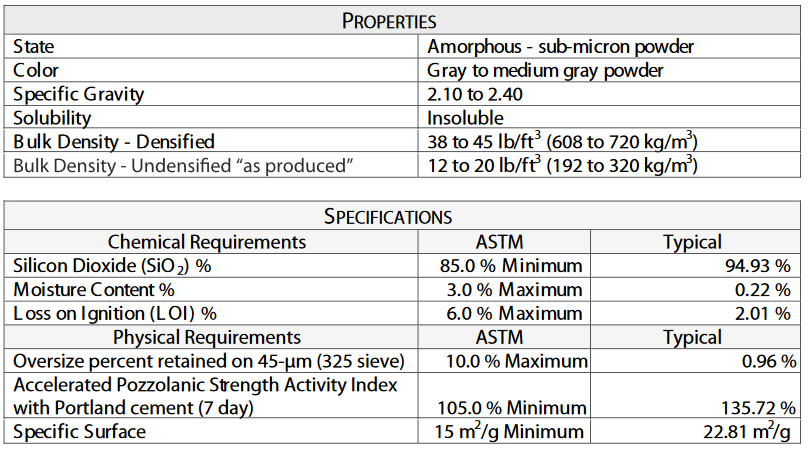
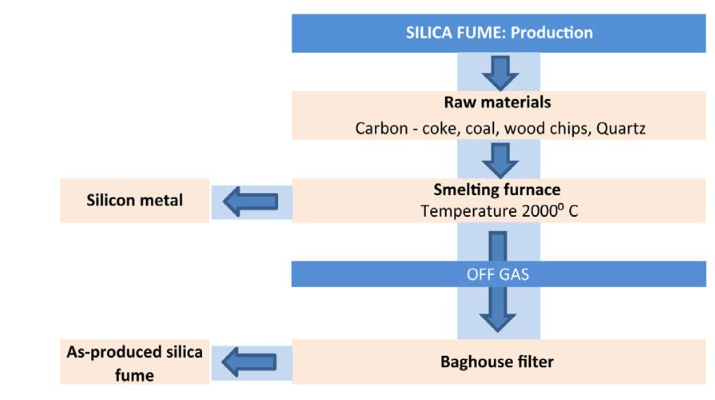
SILICA FUME is a very fine pozzolanic material,composed of amorphous silica produced by electric arc furnaces as a byproducto f the production of elemental silicon or ferrosilicon alloys.

SILICA FUME can be used in a variety of cementitious products such as concrete, grouts ,mortors,fibercement products, plus refractory and ceramics, elastomer and polymer applications.

SILICA FUME is produced in conformance with the ASTM C 1240 specifications.The quality is controlled and monitored throughout the entire production process to ensure that it meets or exceeds specification requirements.

MECHANISM OF SILICA FUME’S
POZZOLANIC REACTION IN A CEMENTITOUS SYSTEM

SILICA FUME in contact with water goes into solution within an hour.The silica in solution forms an amorphous silica-rich,Ca-poor,gel on the surface of the silica fume particles and agglomerates. After time the silica-rich,Ca-poor,coating dissolves and the agglomerates of  silica fume react with free lime (CaOH2) to form calcium silicate hydrates (CSH). This reaction is called the pozzolanic reaction.

STORAGE

SILICA FUME should be kept dry, out of weather and the elements.

SAFETY AND HANDLING PRECAUTIONS

SILICA FUME is generally considered a nuisance dust.Use and handling of silica fume does not represent  a health risk when normal safety rules are observed. Direct contact may cause irritation of eyes. Prolonged contact may cause skin irritation. Inhalation may cause respiratory irritation resulting in coughing and shortness of breath.Th is product may be harmful if swallowed. Do not get in eyes and avoid prolonged skin contact .Do not take internally. Wash thoroughly with water after handling. For more detail, see the MSDS.

WARRANTY STATEMENT

The information given here is based on best knowledge,and is believed it to be true and accurate.Advanced Cement Technologies assumes no responsibility for the use of these statements,recommendations or suggestions,nor are they intended as are commendation for any use,which would infringe any patent or copyright.


Silica Fume Introduction

Silica Fume Introduction
Silica Fume
SupplementaryCementitious Materia

The American Concrete Institute (ACI) defines silica fume as “very fine non-crystalline silica produced in electric arc furnaces as a by-product ofthe productions of elemental silicon or alloys containingsilicon” (ACI 116R). It is usually a gray colored powder, somewhat similar to portland cement or some fly ashes.

Silica fume is usually categorized as a supplementary cementitious material. This term refers to materials that are used in concrete in addition to portland cement.

Silica fume is frequently referred to by other names:

  • Condensed silica fume
  • Microsilica
  • Volatilized silica

Silica fume is a by-product of producing silicon metal or ferrosilicon alloys in smelters using electric arc furnaces. These metals are used in many industrial applications to include aluminum and steel production, computer chip fabrication, and productions of silicones, which are widely used in lubricants and sealants. While these are very valuable materials, the by-product silica fume is of more importance to the concrete industry.

Densified and Undensified Silica Fume

Silica fume has historically been available in three basic product forms: undensified, slurried, and densified. There is no data available, after many years of testing, to show that any one of the product forms will perform better in a concrete mixture than any of the others.

Slurried silica fume is no longer available in the U.S. market. Undensified silica fume is available,but it is not frequently used in ready-mixed or precast concrete. Undensified silica fume is primarily used in pre-bagged products such as grouts or repair mortars.

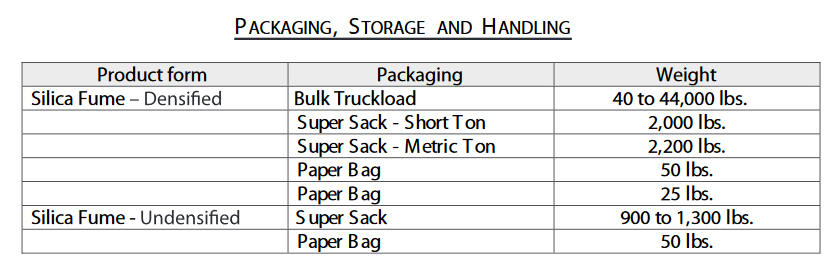
Densified silica fume is produced by treating undensified silica fume to increase the bulk density up to a maximum of about 400 to 720kg/m3. This increase in bulk density is usually accomplished by tumbling the silica-fume particles in a silo, which causes surface charges to build up. These charges draw the particles together to form weak agglomerates. Because of the increased bulk density, this material is more economical for truck transportation.

Densified silica fume works very well in concrete. However, one caution when working with this product form is to ensure that the mixing is adequate to break up the particle agglomerations. Mixing in some types of mixers such as those that are used in dry mix shotcrete, roof tiles, or other applications where coarse aggregate is not present may not be adequate to break up the agglomerations. In those situations, an undensified silica fume may be more appropriate. Contact the Silica Fume Association for assistance in these types of applications.

REFERENCES

Information provided by US DEPARTMENT OF TRANSPORTATION –Federal Highway Administration –Silca Fume Association -April 2005

Fibercement Products

10.200 -FIBERCEMENT PRODUCTS
High Reactivity Metakaolin (HRM)
Engineered Mineral Admixture for Use with Portland Cement

PowerPozz™is a white pozzolanic mineral admixture that enhances the performance of Portland cement in many types of cement-based products. It is particularly well suited for use in Fibercement.

BENDING STRENGTH of Fibercement based products are considerably higher when PowerPozz™ is used:

  • A High Reactivity Metakaolin, PowerPozz™combines chemically with calcium hydroxide, creating calcium silicate and calcium aluminate hydrates.
  • With a consistent particle size distribution, PowerPozz™is several times smaller than cement particles. Thus, PowerPozz™forms a more densified paste by filling voids that would otherwise be present in plain cement compositions.

DIMENSIONAL STABILITY

  • High Reactivity Metakaolin has been shown to reduce drying shrinkageversus comparable silica fume enhanced composites.
  • Reduced overall permeabilitywill greatly reduce the swelling and shrinkage associated with all types of exposure conditions.

IMPROVED BOND STRENGTH

The densified paste system, with enhanced internal cohesion and adhesion, will reduce the incidence of weak fiber/paste interfacial zones without increased brittleness, thus improving the strength andtoughness of the system.

EFFLORESCENCE CONTROL

PowerPozz™is a lime-hungry pozzolan. It has been shown to combine with more than its weight equivalence in calcium hydroxide, helping to prevent Primary Efflorescence during curing. Filling the spaces between cement grains will limit internal “bleeding”, thus reducing CaCO3formation and staining.

In hardened, cured products, PowerPozz™will help prevent Secondary Efflorescence caused by wet/dry cycles in two ways:

COLOR NEUTRAL

PowerPozz™is a white pozzolan. It will not darken existing compositions. In fact, in colored products, it offers the solution to problems with pozzolan color variability by providing quality-assured, lot-to-lot consistency.

SCREEN RETENTION -HATSCHEK PROCESS

PowerPozz™platelet-shaped particles will benefit in improved screen retention in Hatschek processes, providing production gains while enhancing output quality. PowerPozz™has been engineered to optimize micropacking, surface area, and reactivity without sacrificing physical handling and production efficiency.

CONSISTENCY OF SUPPLY

An engineered product, PowerPozz™is manufactured to exacting specifications. Consistent in its properties and performance, PowerPozz™delivers reliable results.

EASE OF USE

No special handling equipment required.

Compressive Strength Concrete

10.107 – CONCRETE COMPRESSIVE STRENGTH
High Reactivity Metakaolin (HRM)
Engineered Mineral Admixture for Use with Portland Cement

dvanced Cement Technologies’ PowerPozz™ High Reactivity Metakaolin is a manufactured pozzolanic mineral admixture which significantly enhances many performance characteristics of cement-based mortars, concretes and related products.

PowerPozz™, derived from purified kaolin clay, is a white, amorphous, alumino-silicate which reacts aggressively with calcium hydroxide, a normal cement hydration byproduct, to form compounds with cementitious value.

Produced to ISO 9002 certification standards, PowerPozz™ HRM is subjected to strict process quality control to assure product uniformity and consistent performance.

Used at 5 – 15% replacement of cement by weight, PowerPozz™ will contribute to: increased strength; reduced permeability; greater durability; effective control of efflorescence; and control of degradation caused by Alkali-Silica Reaction (ASR).

NEW AGE CONCRETE

The construction industry has taken considerable strides forward over the last two or three decades with regard to many materials, in particular – High Strength Concrete (HSC) and generally Higher Performing Concrete Materials, or High Performance Concrete (HPC).

The development of new technology in the materials sciences is progressing rapidly. Advanced composite construction materials and HSC / HPC are gaining wide acceptance in the construction industry of today, and are well positioned for increasing proliferation in use in the future. HSC and HPC will continue to make important contributions to the enhanced quality and efficiency in the construction of infrastructure and our communities in the next century.

HSC / HPC – SOME DISTINCTIONS

It is appropriate to preface a presentation of concrete strength performance, especially when it is being presented in concert with other data pertaining to the bigger-picture performance properties of concrete, by making some distinctions between High Strength Concrete (HSC) and High Performance Concrete (HPC).

ACI TAC Subcommittee on HPC defines HPC as: “ concrete which meets special performance and uniformity requirements that cannot always be achieved routinely by using only conventional materials and normal mixing, placing, and curing practices. The requirements may involve enhancements of characteristics such as placement and compaction without segregation, long-term mechanical properties, early-age strength, toughness, volume stability, or service life in severe environments.”

Given this well accepted view of HPC, we can ascertain that the definition of HSC is a more narrow one than is HPC. The definition of HSC fits within the overall scope of HPC, with strength representing a parameter of performance. The exact point at which normal strength concrete ends and high strength begins is debatable and varies from one global region to another. There is some agreement that concrete with design compressive strengths at 28 days over 50 Mpa, or over 7000 psi is regarded as high strength concrete.

It has become commonplace to associate HPC with durability. This is widely accepted probably on the basis that durability is of prime importance in assessing overall concrete performance. Although concrete that is designed to have high durability performance may also exhibit high strength performance, it is not always safe to assume that the reverse is necessarily true – that all high strength concrete will be necessarily durable concrete.

PowerPozz™ HIGH REACTIVITY METAKAOLIN

The use of pozzolanic materials in the manufacture of concrete has a long, successful history. In fact, their use pre-dates the invention of modern day portland cement by almost 2,000 years.

Today, most concrete producers worldwide recognize the value of pozzolanic enhancements to their products and, where they are available, they are becoming a basic concrete ingredient.

Most pozzolans used in the world today are byproducts from other industries, such as coal fly-ash, blast furnace slag, rice hull ash, or silica fume. As such, there has been relatively little work done with regard to manufactured, optimized and engineered pozzolanic materials, which are specifically intended for use in portland cement-based formulations. PowerPozz™ High Reactivity Metakaolin is a leader among a new generation of such materials.

The use of silica fume and various chemical admixtures have become staple ingredients in the production of concretes with designed strengths in excess of 7500 psi (>50 Mpa) or where service environments, exposure conditions, or life cycle cost considerations dictate the use of High Performance Concrete (HPC).

The introduction of High Reactivity Metakaolin to the HSC market has provided an alternative to the use of silica fume. Equivalence in strength development and durability properties along with several additional features of HRM including color and workability have effectively expanded the design boundaries of HPC materials.

The benefits in engineering properties that result from the use of PowerPozz™ HRM come with few “side effects”. The fresh mix texture, workability and finishability are generally enhanced by the replacement of 5-15% of cement with HRM. PowerPozz™ is white in color and will not darken pigmented, gray or white cement-based concrete or products. Easy to handle in trucks, silos and plants, PowerPozz™ is produced under ISO 9002 Certification and is consistent in chemical, physical and performance characteristics from lot-to-lot.

TEST PROGRAMS:

Presented herein are 3 programs which involved evaluations of the effect of PowerPozzTMHRM on the compressive strength of concrete.

Test Program #1, conducted by researchers at the University of British Columbia, in Vancouver, Canada, included some compressive strength testing of High Performance Concrete. These test mixes were formulated with cementitious materials contents of 461 kg / m3 (813 lb / yd3 ), w/cm ratio of 0.40 and achieved strengths in excess of 10,000 psi.

Test Program #2, conducted by CTL, Skokie, IL. Presented here are the compressive strength results extracted from the testing program submitted to New York State Department of Transportation for approval of HRM as an alternative mineral admixture to silica fume for HPC.

Test Program #3, conducted by Mahaffey Associates Pty Ltd, Australia. The results presented are trial mix results only; no control mixes were made for comparison. It was expressed at the time of the study that the testing objective was to compare PowerPozzTMHRM with the well-known and established strength performance of their standard silica.

fume HPC mix. The results are of particular interest because the strengths are in the high range at 28 days (in excess of 12,000 psi) and they were made with an Australian Type SL cement (slag cement).

TEST PROGRAM #1: (1)

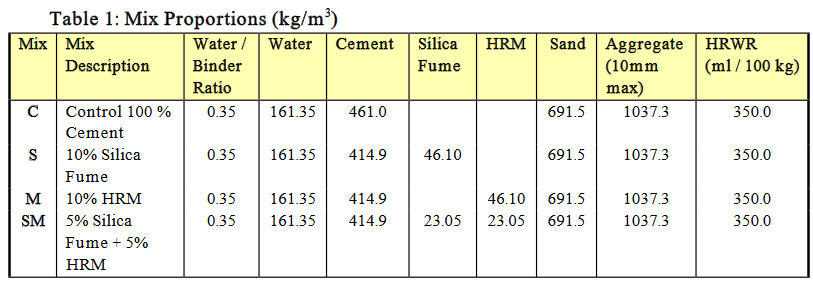
A comparison of HSC’s was conducted. The performance of PowerPozzTM HRM is compared with that of a commercial silica fume product, and with that of a plain cement control concrete. The mix proportions are reported in Table 1.
CHARACTERISTICS OF CONCRETE MIXES:

Slump, air content and unit weight values for the eight mixes are presented in Table 2. The slump values are indicative of the reduction in workability due to the replacement of 10% by mass of silica fume (Mix S). This reduction in slump was more pronounced in the 10% silica fume replacement mix (Mix S) than in the 5% silica fume / 5% HRM

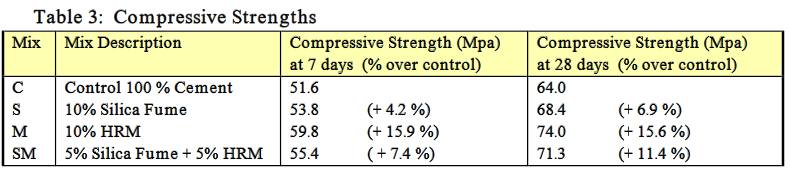
combination mix (Mix SM). The mix with 10% mass replacement of cement by HRM (Mix M) demonstrated greater slump values, indicative of a comparative improvement in workability to those mixes containing silica fume. It may be interpreted from this data, that in order to achieve a given target slump or optimum workability, HRM concretes may require lower dosages of superplasticizer than silica fume concretes. This is attributable to the larger particle size and lesser surface area of HRM compared to silica fume. It is important to point out that although HRM has a smaller surface area than does silica fume, and it is generally accepted that, with pozzolans, finer is more reactive, the HRM appears to be more reactive, not less, than silica fume on a pound for pound basis as measured by concrete (or mortar) compressive strengths. (See Table 3)

RESULTS & DISCUSSION:

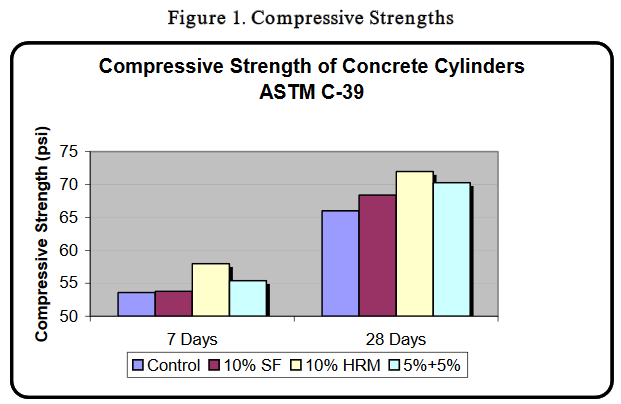
Seven and twenty-eight day compressive strengths are reported in Table 3 and are presented in graphic form in Figure 1.

Marginal increases in compressive strength over the control mixes were observed for the mixes with silica fume, HRM, and the combined s.f./HRM mix. These results have been reported by other researchers (2,3) who have also reported that even with HRM mixes of higher air content than the comparative mixes with silica fume, the strength and performance of HRM concrete were similar to, or better than, the concrete with silica fume.

It is important to point out that a period of 28 days may not be sufficient for the development of the full marginal potential strengths for the silica fume or HRM concretes. Generally, greater later age strengths (beyond 28 days) are expected for pozzolanic mixes as compared to plain cement control at a given water to binder ratio.
 

TEST PROGRAM # 2(4)

In support of an application to the New York State Department of Transportation (NYSDOT) for the department’s review & approval of PowerPozzTM HRM, a comprehensive testing program was undertaken by CTL, Skokie, IL. NYSDOT regards metakaolin as an equivalent substitute for silica fume for its High Performance Concrete requirements.

Part of this test program included a comparison of compressive strengths of plain cement and HRM mixes.

In this program, cylinders were made and tested in accordance with ASTM C-39 Compressive Strength of Cylindrical Concrete Specimens.

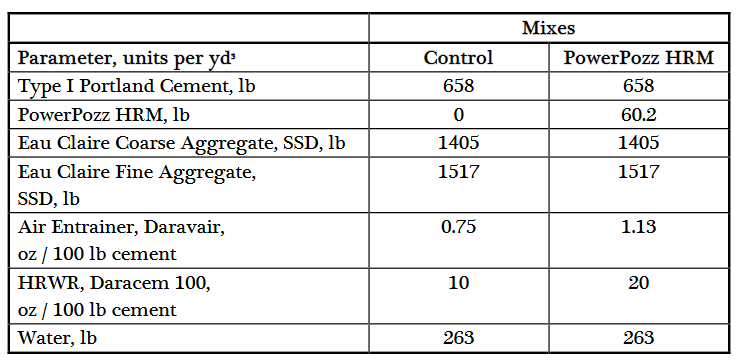
The mix parameters are presented in Table 4.
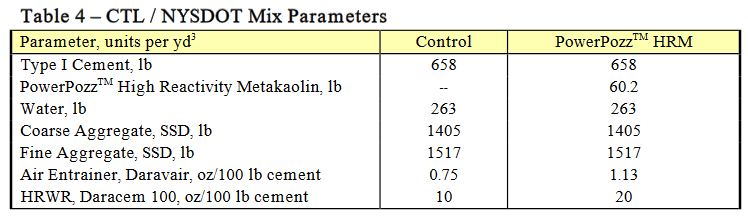
The HRM was proportioned as an addition to the cement, as per NYSDOT mix design for silica fume HPC. The effective addition rate is 9.1% by cement mass.

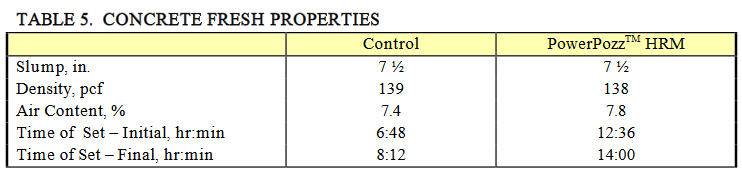
The mix with the HRM required additional air entraining admixture compared with the control mix to reach the target air content.

The mix with the HRM addition required additional amounts of HRWR to achieve slump which was comparable to the control mix, at 7 ½ inches.

Concrete Fresh Properties and Time of Set (ASTM C-403) are presented in Table 5.
The compressive strengths of the concrete specimens were taken as the average of three cylinders at each of four age intervals for the control and test (HRM) mixes. The results are presented in Table 6.
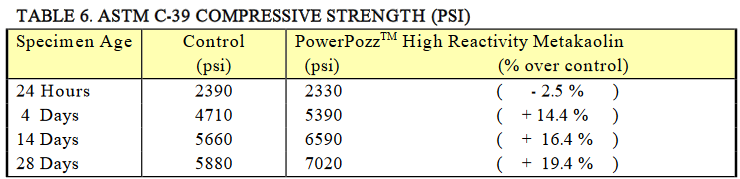
The HRM concretes exhibited an increase in compressive strength over the control concrete. At ages beyond 28 days, it would be a normal expectation for a pozzolanic concrete to exhibit an increasing margin, or index of improvement over a control concrete.

TEST PROGRAM # 3(5)

This study was undertaken by Mahaffey Associates, Pty. Ltd., Australia for a specific client who was interested in the development of an alternative to their silica fume HPC formulation. Improved workability was seen to be an attractive feature in favor of PowerPozzTM HRM. The mixture details are presented in Table 7.
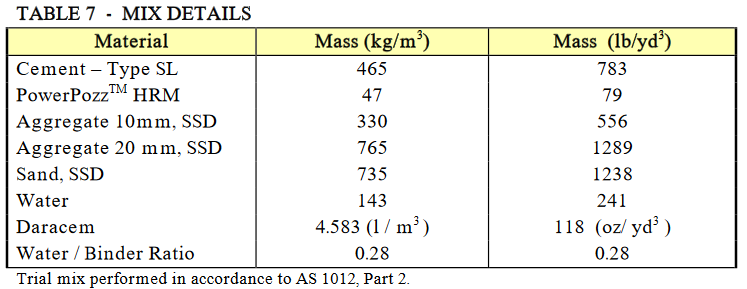
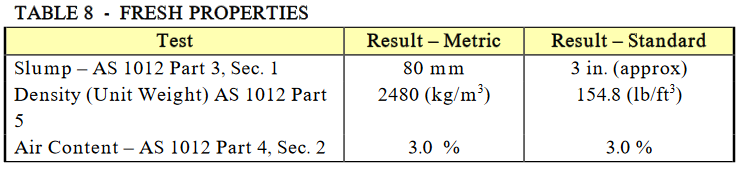
The concrete fresh properties are reported in Table 8. The concrete with PowerPozzTM HRM was observed to be less sticky than a normal silica fume mix, and had a much brighter overall color than a silica fume concrete.
The compressive strength results are reported in Table 9. The cylinders tested were 100 x 200 mm (4”x 8”).

These strength levels are achievable with the use of HRM, a low w/b ratio, HRWR, and well graded aggregates. The strength results were deemed to be very good and were meeting the level of strength gain that was being achieved routinely with silica fume mixes.

CONCLUSION

PowerPozzTM High Reactivity Metakaolin is an effective additive in the formulation of Moderate Strength and High Strength Concretes. Through the use of combinations of additives, superplasticizers and optimized aggregate gradation, very high strengths are attainable. Ask your ACT Representative for assistance in formulating HSC / HPC mix designs for your construction challenges or applications.

References:

  1. Dubey, A. and Banthia, N. “Influence of High Reactivity Metakaolin and Silica Fume on the Flexural Toughness of High Performance Steel Fiber-Reinforced Concrete” ACI Materials Journal Vol. 95 No. 3 May-June 1998 pp 284
  2. Calderone, M.A.; Gruber, K.A.; and Burg, R., “High Reactivity Metakaolin: A New Generation Mineral Admixture,” Concrete International: V.16, No. 11, 1994, pp 37-40.
  3. Calderone, M.A., and Gruber, K.A., “High Reactivity Metakaolin – A Mineral Admixture for High Performance Concrete” Concrete Under Severe Conditions, K. Sakai, N. Banthia, and O.E. Gjorv eds.,E & FN Spon, 1995, pp 1015-1024.
  4. CTL Test Report to Advanced Cement Technologies, LLC – September 22, 1997.
  5. Mahaffey Test Report to Advanced Cement Technologies, LLC – June 3, 1997.

All information, while provided in good faith, with every effort made to assure accuracy, is provided by Advanced Cement Technologies at no charge, and with warranty–express or implied. Data given, unless otherwise stated, are based on standard testing procedures which are available on request. Variations do occur in individual tests and the results stated herein cannot be taken for minima or maxima for specification purposes.

As we cannot anticipate all possible applications of our product, nor variations in manufacturing equipment, formulae, methods, or practices, we guarantee only that the product will meet the specifications of Advanced Cement Technologies at the time of sale. Advanced Cement Technologies reserves the right to change specifications should it become necessary. The product is sold without express or implied warranty, with all warranties of fitness of purpose and merchantability being disclaimed, and on condition that the purchaser is responsible for the determination of the product’s suitability for a particular purpose.

Statements concerning the possible use of our product are not intended as recommendations for use. No liability is accepted for any infringements of any existing or future patents.

All products sold, unless otherwise stated, will be subject to general sales conditions, which are supplied with all quotationsand order confirmations.

Concrete Permeability

10.106 CONCRETE PERMEABILITY
High Reactivity Metakaolin (HRM)
Engineered Mineral Admixture for Use With Portland Cement

Advanced Cement Technologies’ PowerPozz™ High Reactivity Metakaolin is a manufactured pozzolanic mineral admixture, which significantly enhances many performance characteristics of cement-based mortars, concretes and related products.

PowerPozz™, derived from purified kaolin clay, is a white, amorphous, alumino-silicate, which reacts aggressively with calcium hydroxide to form compounds with cementitious value.

Produced under ISO 9002 conditions, PowerPozz™ is subjected to strict process quality control to assure product uniformity and consistent performance.

Used at 5 -15% replacement of cement by weight, PowerPozz™ will contribute to: increased strength; reduced permeability; greater durability; and effective control of efflorescence and degradation caused by Alkali-Silica Reaction (ASR).

Concrete Durability

A concrete structure is considered to be of adequate durability if it performs in accordance with its intended level of functionality and serviceability over an expected or predicted life cycle. Durable concrete must have the ability to withstand the potentially deteriorative conditions to which it can reasonably be expected to be exposed.

Concrete deterioration can be due to adverse mechanical, physical, or chemical causes. It is often the case where one or more deteriorative mechanisms are at work by the time a problem is identified. In fact, in terms of deterioration of concrete due to physical or chemical causes, the mobility of fluids or gases through the concrete are nearly always involved. The overall susceptibility, or penetrabilityof a concrete structure, especially when compounded by additional environmental or exposure challenges, is thekey to its ultimate serviceability and durability.

Low porosity / permeability / penetrability of concrete to moisture and gas is the first line of defenseagainst: frost damage, acid attack, sulfate attack, corrosion of steel embeddments and reinforcements, carbonation, alkali-aggregate reaction, and efflorescence to name a few of the most prominent concrete ailments.

Concrete Permeability

Concrete durability depends largely on the ease (or difficulty) with which fluids (water, carbon dioxide, oxygen) in the form of liquid or gas can migrate through the hardened concrete mass. Concrete is a porous material. Therefore, moisture movement can occur by flow, diffusion, or sorption. We are concerned with all three, but generally the overall potential for moisture and ion ingress in concrete by these three modes is referred to as its permeability.

Concrete Porosity

The aspect of properly consolidated, quality, hardened concrete that affects its permeability is the nature of the hardened cement paste itself and, as well, the nature of the interfacial zone between concrete “macro components”, (i.e.: aggregates, reinforcing materials, fibers) and its cement paste structure. The paste-aggregate interfacial zoneis known to be different from the cement paste mass in general. It is usually more porous, richerin Ca(OH)2 (calcium hydroxide),and is moreprone to micro cracking than the rest of the paste matrix. The interfacial zone is normally in the order of 50 um in thickness, and can occupy 30 -50% of the total volume of cement paste in concrete. In comparison to the bulk hydrated cement paste, the paste-aggregate interfacial zone is weaker, more soluble, and can be a least resistant path for migrating moisture and other harmful substances.

It should be noted that although aggregates are porous, their pores are normally discontinuous in a concrete matrix, being completely enveloped by cement paste.

Discrete voids or pores in concrete, including entrained air bubbles that are discontinuous similarly do not contribute significantly to concrete permeability.Concrete porosity is usually expressed in terms of percentage by volume of concrete. It is the interconnectivity of pores, rather that total porosity that determines a concrete’s permeability.

A concrete with a high proportion of disconnected pores may be less permeable that a concrete with a much smaller proportion of connected, or continuous pores. With greater particularity, it is the overall nature of the matrix pore structure that ultimately affects its permeability, sorptivity, and diffusivity. The size, distribution, interconnectivity, shape, and tortuosity of pores are all determining factors in the overall permeability of a concrete matrix.

Waterproof or watertight Portland cement concrete is not a real possibility. Instead, our goal in design and formulation of durable concrete mixes is to slow and minimize the potential for, and rate of, moisture ingress and movement.

Effect of Pozzolan on Porosity / Permeability

Experts have widely agreed for decades that the use of pozzolana, or supplementary cementing materials, can reduce concrete permeability by 7 to 10 times. In particular the mechanism of pozzolana in this role can be viewed as having two principal aspects. First, the use of aquality pozzolan will result in a denser pore structure in the cement paste matrix. Second, the chemical reaction of lime crystals to form binders has a direct effect of increased paste density, reduced porosity over time, and will enhance the matrix chemical resistance to many aggressive species.

Effect of PowerPozz HRM on Porosity

The effect of High Reactivity Metakaolin in this regard is pronounced. The engineered particle size of HRM serves as an effective micro-packing additive. Its average particle size being approximately one order of magnitude smaller than

the average cement particle, it will serve to fill the interstitial spaces between cement grains, thus physically tightening the particle arrangement. In addition, the optimized reactivity of HRM serves to chemically combine with calcium hydroxide. The alteration of lime is in a way a removal by substitution reaction, where calcium hydroxide crystals are reacted by HRM, in the presence of moisture, to form durable binding products such ascalcium silicate and calcium aluminate hydrates. The physical and chemical effect of HRM is of particular significance with regard to the paste-aggregate interfacial zones mentioned previously.

The pore size distribution is affected by HRM. Generally, the total pore volume is reduced and the average pore size is decreased. There is a significant decrease in the occurrence of very fine pores (0.01 -0.10 um) in an HRM paste as compared to plain OPC.

Chloride Ion Permeability

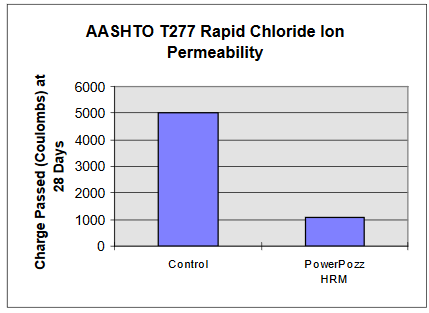
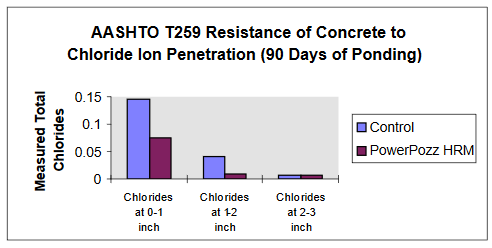
The resistance of HRM concrete to chloride-ion penetration is significantly higher than plain OPC of Fly Ash concrete, and similar to that of silica fume concrete.

There are two predominant tests used to determine concrete’s permeability to chloride ions and other aggressive solutions:

  • The American Association of State Highway and Transportation Officials (AASHTO) Test Method T277, Rapid Determination of the Chloride Permeability of Concrete.
  • Test Method T259 Resistance of Concrete to Chloride Ion Penetration.

The AASHTO T259 (90 Day Ponding) test has long been favored by concrete corrosion specialists, but the need for a faster and less costly method has given the T277 (Rapid Chloride Permeability Test -RCPT) a recent rise in popularity. Presently, the RCPT is common in durability specifications, with results being expressed in units of coulombs are specified in the 700 to 1500 coulomb range for concretes tested at ages between 28 and 56 days of maturity.

Recent critical reviews of the RCPT have created many debates concerning the reliability, usefulness, and appropriateness of the test method itself and its results. Importantly, the need for correlation of results to the 90 Day Ponding method has been raised.

Effect of PowerPozz High Reactivity Metakaolin

As part of a broad-based review of PowerPozz performance in High Performance Concrete (HPC) mixes, the effect of PowerPozz HRM on both the AASHTO T277 & T259 tests were established. Testing was carried out at Construction Technology Laboratories (CTL) in Skokie, IL.

Testing

Testing was carried out in accordance with the AASHTO methods. The mix design is indicated in the table below.

The results clearly demonstrate the positive effect of PowerPozz in improving the chloride penetration resistance of concrete.


Reinforcing Steel Corrosion

Ingressing water that contains soluble chloride ions can result in steel depassivation. In a depassivied state, in the presence of water and oxygen, steel will corrode rapidly. The corrosion of steel is accompanied by expansive pressures, which lead to cracking. The cracked matrix is then severely compromised. An escalating and irreversible process of deterioration follows.

The development of low permeability concrete, with a heightened resistance to chloride ion ingress holds the key to corrosion protection. High Reactivity Metakaolin will substantially increase a concrete’s resistance to chloride ingress by contributing to:

  • Reduced overall permeability (to water, salt solutions, vapor, gases)
  • Reduced chloride ion permeability
  • Reduction in size, and stabilization in chemistry of paste /steel interfacial zone
  • Reduce chloride content in pore water
  • Mitigated cracking caused by shrinkage and ASR
  • Maintenance of pore solution pH (>12.5)

The permeability of concrete may be the most important of its properties that affects its ultimate serviceability and durability. This aspect of performance design, especially where first-time and long term life-cycle costs are major

considerations, must be taken with due seriousness. This holds particular importance for major infrastructural projects and/or projects which will subject its concrete components to aggressive environments or exposure conditions. Worth specific mention for example are: bridge members and decks, parking structures, offshore and marine structures, pavement or repair overlays, building components, water resource facilities, and the like.

PowerPozz High Reactivity Metakaolin offers the means to achieve the desired engineering properties of high performance, extended durability concrete with a minimum of side effects or special handling constraints. Easy to use, and offering ISO 9002 certified, manufactured, consistent performance qualities, PowerPozz offers a leading edge solution to the next centuries’ concrete engineering challenges.

Referenced Documents:

CTL Test Report to Advanced Cement Technologies. September 1997John J. Meyers; Wissam E. Touma; Ramon L. Carrasquillo: Dept. of Civil Eng. The University of Texas at Austin. “Permeability of High Perfromance Concrete: Rapid Chloride Ion Test vs Chloride Ponding Test.” Presented at PCI / FHWAInternational Symposium on High Performance Concrete. New Orleans, Oct. 1997.Neville, A.M. “Properties of Concrete” Fourth Edition Wiley & Sons 1996

All information, while provided in good faith, with every effort made to assure accuracy, is provided at no charge, and without warranty -express or implied. Data given, unless otherwise stated, are based on standard testing procedures which are available on request. Variations do occur in individual tests and the results stated herein cannot be taken for maxima or minima for specification purposes.

As we cannot anticipate all possible applications of our products, nor variations in manufacturing equipment, formulae, methods, or practices, we guarantee only that the products will meet the specifications of Advanced

Cement Technologies at the time of sale. Advanced Cement Technologies reserves the right to change specifications should it become necessary. Products are sold without warranty, express or implied, with all warranties of fitness of purpose and merchantability being disclaimed, and on condition that the purchaser is responsible for the determination of each product’s suitability for a particular purpose.

Statements concerning the possible use of our products are not intended as recommendations for use. No liability is accepted by Advanced Cement Technologies for any infringements of any existing or future patents.

Products sold, unless otherwise stated, will be subject to the general terms and sales conditions of Advanced Cement Technologies.

Efflorescence

10.105 – EFFLORESCENCE
High-Reactivity Metakaolin
Engineered Mineral Admixture for Use with Portland Cement

Advanced Cement Technologies’ PowerPozzTM High Reactivity Metakaolin is a manufactured pozzolanic mineral admixture which significantly enhances many performance characteristics of cement-based mortars, concretes and related products.

PowerPozzTM, derived from purified kaolin clay, is a white, amorphous, aluminosilicate which reacts readily with calcium hydroxide to form compounds with cementitious value. PowerPozzTM is subjected to strict process quality controls to assure product uniformity and consistent performance. PowerPozzTM is produced to 1S0 9002 Certification Standards and meets the specification of ASTM C-618 – Class N Pozzolans.

Used at 5 – 15% by weight of cement, PowerPozzTM will provide: increased strength; reduced permeability; greater durability; and is effective in mitigating efflorescence and degradation caused by alkali-silica reaction (ASR).

Problem Statement

The phenomenon, commonly known as efflorescence, occurs when calcium hydroxide (free lime), a soluble reaction by-product of the hydration process of ordinary portland cement (OPC), is carried to the surface of cement-based products by migrating water. Exposed to the atmosphere, calcium hydroxide reacts with carbon dioxide to form calcium carbonate deposits which remain apparent as unsightly, whitish stains. Too often, efflorescence shows up to severely dampen the aesthetic appeal of otherwise successful masonry and composite projects.

Most common and problematic in masonry construction and architectural precast products, efflorescence is a persistent problem which has brought about a situation where masonry and precast design flexibility has been unnecessarily limited.

Two forms of Efflorescence have been identified – Primary and Secondary. They are distinguished by the point in time at which they occur in relation to the curing process.

  • Primary efflorescence occurs during the curing process. Excess water in the matrix bleeds to the surface where it eventually evaporates, leaving behind deposits of calcium hydroxide crystals (Ca(OH)2) which, when exposed to the carbon dioxide (CO2) in the air, form calcium carbonate (CaCO3) in the surface pores.
  • Secondary efflorescence occurs in cured concretes and composites, which are in contact with moisture or are subjected to cycles of re-wetting and drying. Moisture penetrates into, and leaches from, the matrix, dissolving soluble calcium hydroxide (Ca(OH2) that remains as a normal byproduct of portland cement hydration. Upon subsequent drying, the water, with lime in solution, can migrate to the surface (atmosphere) where, upon evaporation, leaves deposits of calcium hydroxide (Ca(OH)2 and subsequently, calcium carbonate (CaCO3).

The PowerPozzTMSolution

  • Eliminate Free Lime from the system through rapid Pozzolanic Reaction,
  • Increase the density and Reduce the Porosity and Permeability of the paste system,
  • Reduce the Cement Content with Pozzolan Substitution 5 – 15% (the Dilution Effect).

Pozzolanic Reactivity

PowerPozzTMis a lime-hungry pozzolan that reacts with free calcium hydroxide to form stable, insoluble, strength-adding, cementitious compounds.

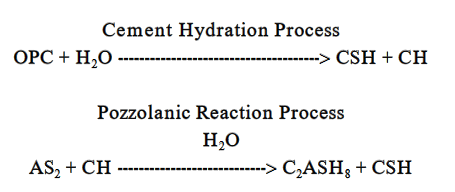
When PowerPozzTMHRM (AS2) reacts with calcium hydroxide (CH), a cement hydration byproduct, a pozzolanic reaction takes place whereby new cementitious compounds, (C2ASH8) and (CSH), are formed. These newly formed compounds will contribute cementitious strength and enhanced durability properties to the system in place of the otherwise weak and soluble calcium hydroxide.

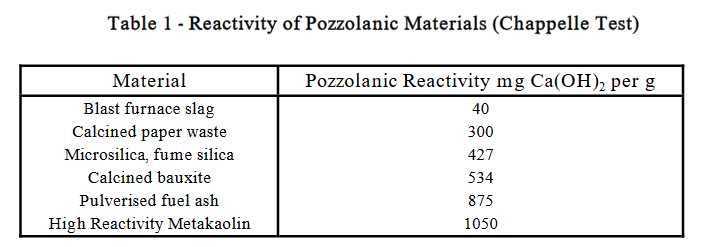
Unlike other commercially available pozzolanic materials, PowerPozzTMHRM is a quality-controlled, manufactured material. It is not a byproduct of an unrelated industrial process. PowerPozzTMhas been engineered and optimized to contain a minimum of impurities and to react efficiently with cement’s hydration byproduct –calcium hydroxide. As determined by the Chappelle test(1), Table 1 summarizes the relative reactivities of six different pozzolans, including an HRM sample(2).

Primary efflorescence can be reduced by using PowerPozzTM at 5 – 15% replacement of cement by weight. Care must be taken to follow good curing.

practices that will minimize evaporation during curing. Low water cement ratios, plastic vapor barriers, delayed demolding, high humidity (or steam curing) are now, and have long been, recommended as good concrete curing practice. The use of High Reactivity Metakaolin works to the root of the efflorescence problem by eliminating the calcium hydroxide from the system. Once fully cured, an optimized HRM-formulated product cannot exhibit Secondary Efflorescence as virtually all of the available free lime has been chemically combined by pozzolan.

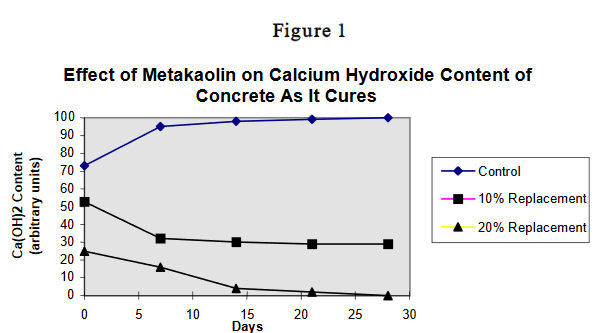
The ability of metakaolin to combine with calcium hydroxide is well-researched and documented. Larbi and Bijen(3) and Jones, et al(4) have shown that the pozzolanic reaction with pure metakaolin is rapid. In fact, it is apparent that the rate of reaction approaches that of cement hydration and subsequent lime liberation. Figure 1 shows the reaction curves and shows that metakaolin, at 20%, virtually eliminated Ca(OH)2 from the system at 14 days.

Reduced Permeability

Concrete’s porosity, pore interconnectivity, and overall permeability to fluids have direct influence on the concrete’s ultimate durability and useful service life. Where quality concretes, mortars and other cement-based products are produced with careful control of materials and water to cement ratios, performance can be significantly enhanced by the addition of highly reactive pozzolans. The addition of PowerPozzTM HRM to these materials, at a 5 – 15% replacement by weight of cement will contribute to a more compact arrangement of cementitious products where increased paste densities, mechanical interlock and paste-aggregate bond are the result. The key to maximum results here, as it is with the addition of any finely divided material to concrete in wet or dry casting processes, is a fully dispersed and homogenous matrix of ingredient materials.

In addition, the pozzolanic reaction, as described above, has a direct and significant influence on the material’s service permeability. As soluble hydration byproducts in a non-pozzolan enriched concrete are leached out by migrating moisture, they leave behind opened and more interconnected pore systems which will set the stage for an increased risk and rate of efflorescence discoloration, fading and staining. By chemically combining with calcium hydroxide, the pore system is rendered much more stable.

The surface texture of a concrete, stucco, mortar or related product can also be enhanced with a PowerPozzTMaddition. Sharper, stronger edges and details with a “tightened” surface are possible. It is conceivable that with a finer pore system on the surface, any occurrence of efflorescence or related fading of pigmented products would be less apparent as calcium carbonate deposits tend to be more obvious in products with larger, more open surface pores. These effects are principally attributed to the efficient size, shape and micropacking effect of PowerPozzTM’sclayparticles which contribute to a more dense and internally cohesive paste structure.

Cement Replacement- The Dilution Effect

PowerPozzTMhas the potential to produce high strengths in cement-based products at 5 – 15% replacement by weight of cement. As such, it is common to see increases in concrete or mortar compressive strengths (>20%) such that a further cement reduction beyond pound for pound cement replacement can be taken if strength gains of this degree are not required or beneficial. It is possible for PowerPozzTM to replace cement by weight at 1:2 to 1:3; this would, of course, require trial mixes with specific materials to confirm the exact formula. It is in this further cement reduction that the dilution effect becomes significant. This is of particular significance for stucco products (eg. where strength is of lower concern), but would need to be balanced against workability and related properties as a function of total cementitious paste content.

PowerPozzTMfeatures:

  • Rapid reaction. The potential to react with more than its own weight equivalent in calcium hydroxide.
  • A minimum of impurities.
  • Stable-to-enhanced early strength performance (< 24 hours).

This unique package of features and benefits makes PowerPozzTMstand out within the world of admixtures as the performance leader and preferred pozzolan for use in quality and high performance architectural and structural applications – especially where engineering properties, aesthetics and durability are important.

All information, while provided in good faith, with every effort made to assure accuracy, is provided by Advanced Cement Technologies at no charge, and without warranty –express or implied. Data given, unless otherwise stated, are based on standard testing procedures which are available on request. Variations do occur in individual tests and the results stated herein cannot be taken for minima or maxima for specification purposes.

As we cannot anticipate all possible applications of our product, nor variations in manufacturing equipment, formulae, methods, or practices, we guarantee only that the product will meet the specifications of Advanced Cement Technologies at the time of sale. Advanced Cement Technologies reserves the right to change specifications should it become necessary. The product is sold without express or implied warranty, with all warranties of fitness of purpose and merchantability being disclaimed, and on condition that the purchaser is responsible for the determination of the product’s suitability for a particular purpose.

Statements concerning the possible use of our product are not intended as recommendations for use. No liability is accepted for any infringements of any existing or future patents.

All products sold, unless otherwise stated, will be subject to general sales conditions, which are supplied with all quotations and order confirmations.

REFERENCES

  1. LARGENT, R. Bull. Liasons Lab. Pont Chausees, v.93, 1978, pp. 63.
  2. New Pozzolanic Materials For The Concrete Industry ECC International – Europe.
  3. LARBI, J.A. and BIJEN, J.M. PhD Thesis, Delft University, 1991.
  4. JONES, T.R., WALTERS, G.V. and KOSTUCH, J.A. 9th Int. Conf. AAR in Concrete, v.1, 1992, pp. 485-496

Alkali-Silica Reaction (ASR)

10.104 – ALKALI-SILICA REACTION (ASR)
High Reactivity Metakaolin
Engineered Mineral Admixture for Use with Portland Cement

Advanced Cement Technologies’ PowerPozz™ (a High-Reactivity Metakaolin) is a manufactured pozzolanic mineral admixture which significantly enhances many performance characteristics of cement-based mortars, concrete, and related products.

Derived from purified kaolin clay, PowerPozz™ is a white, amorphous, aluminosilicate which reacts readily with calcium hydroxide to form compounds with cementitious value.

Background – The ASR Problem

Quality concrete is a carefully selected composition of materials which, when properly manufactured, proportioned, mixed, placed, consolidated, finished and cured will have sufficient strength and durability in accordance with the desired application. Unfortunately, a problem exists and has long been identified where cement alkalis, while being important to the concrete’s strength development, can be, under certain circumstances, principally and directly contributory to degradation and loss of durability.

ASR can be explained as the situation where cement alkalis react with certain forms of silica in the aggregate component of a concrete, forming an alkali-silica gel at the aggregates surface. This formation, often referred to as “reaction rim” has a very strong affinity for water, and thus has a tendency to swell. These expanding compounds can cause internal pressures sufficiently strong to cause cracking of the paste matrix, which can then result in a compromised concrete with an open door to an increasing rate of deterioration.

For the alkali silica reaction to occur and produce a potentially expansive gel, Ca, OH, reactive silica, water, and soluble metal alkali ions need to be present. The Ca(OH)2 is the free lime by-product of ordinary portland.

cement (OPC) hydration. Reactive phases of silica are found in some sources of construction aggregates with wide regional variations. The soluble alkali ions may be present in the pore solution of the concrete (the amount being primarily dependent on cement alkalinity) and/or from external sources of salts such as seawater, or road de-icing substances.

The worldwide costs of ASR degradation are extremely high. Regional manifestations of these costs are seen in: remedial repairs in already deteriorating structures; new construction (where costs are impacted dramatically in use in imported, low-alkali cement and /or imported non-reactive aggregates); and in the less tangible impact on structure life cycle and overall owner and user utility.

The PowerPozz™ Solution

When a pure form of Metakaolin is employed as a pozzolanic mineral admixture at 10 -15% weight of cement, the calcium hydroxide level can be reduced sufficiently to render any gels that are formed as non-expansive (1,2). The protection is further enhanced in view of the Metakaolin addition’s effect on overall reduced concrete permeability and in a slight reduction in the alkalinity of the pore solution.

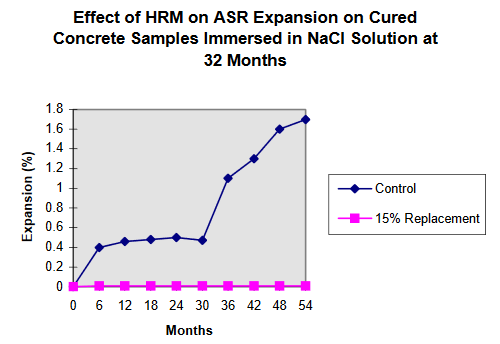
Figure 1, illustrates the research by Jones et al (1,2) and shows the effect of High Reactivity Metakaolin in mitigating the expansion that is very clearly the result in control (plain OPC) samples under the same curing and exposure conditions. After 32 months of curing at 100% relative humidity, the control and HRM samples were immersed in a saturated sodium chloride solution to induce expansion. The expansion is eliminated in this study at a 15% replacement of cement by weight with a HRM.

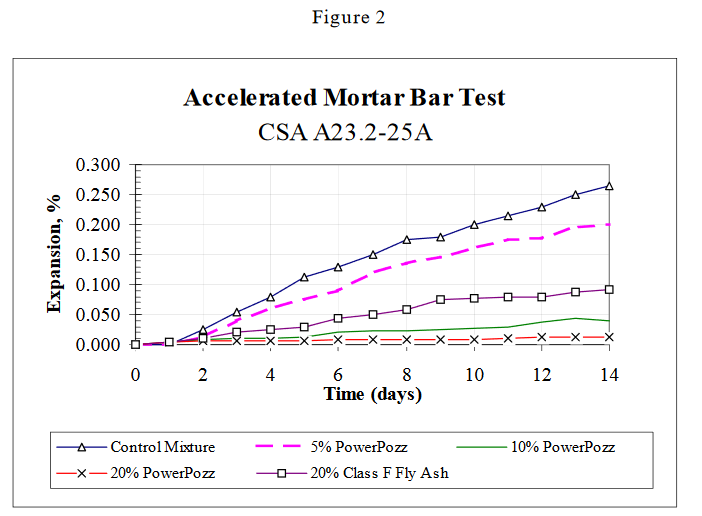
Tests have been performed using PowerPozz™ HRM to study the potential to mitigate the effects of ASR in mortar bars. The study reported here, conducted by Jacques Whitford and Associates, was performed in accordance with Canadian Test Standard CSA A23.2-25A (Accelerated Mortar Bar Test) which is similar to ASTM C1260. The evaluation was under the direction of Mr. Wilbert S. Langley (3). Results are illustrated in Figure 2.

The test involved a control (plain OPC) mix, a 20% Class F flyash mix, and PowerPozz™ mixes at 5, 10, and 20% replacement. The results show that with a known very reactive aggregate, PowerPozz™, at 10%, dramatically reduced the expansion versus the control and flyash formulations. At 20%, expansion was virtually eliminated.

Referenced Documents:

    1. Jones, T.R. , Walters, G.V., and Kostuch, J.A. 9th International Conference on AAR in Concrete, v.1, 1992, pp. 485-496.
    2. Walters, G.V., and Jones, T.R. 2nd International Conference on Durability of Concrete, Canada, ed. V.M. Malhotra, 1991, pp. 941-953.
    3. Test Report – Jacques Whitford Materials Ltd., August 29, 1995.

All information, while provided in good faith, with every effort made to assure accuracy, is provided at no charge, and without warranty – express or implied. Data given, unless otherwise stated, are based on standard testing procedures which are available on request. Variations do occur in individual tests and the results stated herein cannot be taken for maxima or minima for specification purposes.

As we cannot anticipate all possible applications of our products, nor variations in manufacturing equipment, formulae, methods, or practices, we guarantee only that the products will meet the specifications of Advanced Cement Technologies at the time of sale. Advanced Cement Technologies reserves the right to change specifications should it become necessary. Products are sold without warranty, express or implied, with all warranties of fitness of purpose and merchantability being disclaimed, and on condition that the purchaser is responsible for the determination of each product’s suitability for a particular purpose.

Statements concerning the possible use of our products are not intended as recommendations for use. No liability is accepted by Advanced Cement Technologies for any infringements of any existing or future patents.

Products sold, unless otherwise stated, will be subject to the general terms and sales conditions of Advanced Cement Technologies.

Partical Size Distribution

10.103 – PARTICLE SIZE DISTRIBUTION (PSD)
High Reactivity Metakaolin (HRM)
Engineered iMineral Admixture for Use with Portland Cement

Advanced Cement Technologies’ PowerPozzTM HRM is a manufactured pozzolanic mineral admixture which significantly enhances many performance characteristics of cement-based mortars, concretes, and related products.

PowerPozzTM, derived from purified kaolin clay, is a white, amorphous, alumino-silicate which reacts aggressively with calcium hydroxide to form compounds with cementitious value.

Produced under ISO 9002, PowerPozzTM is subjected to strict process quality controls to assure product uniformity and consistent performance.

Used at 5-15% replacement of cement by weight, PowerPozzTM will contribute to: increased strength; reduced permeability; greater durability; and effective control of efflorescence and degradations caused by alkali-silica reaction (ASR) in concrete.

PowerPozzTM is milled and classified to exacting particle size distribution specifications.

In optimizing the PSD for PowerPozzTM, a number of factors were considered to be important:

  • Pozzolanic reactivity and rate of reaction
  • Micropacking characteristics when used with Ordinary Portland Cement (OPC)
  • Effect on water demand and /or water-reducing admixture demand
  • Dispersion efficiency in batching and mixing processes
  • Dry product handling and storage characteristics
  • Effect on fresh product rheological characteristics
  • Color, brightness, reflectivity

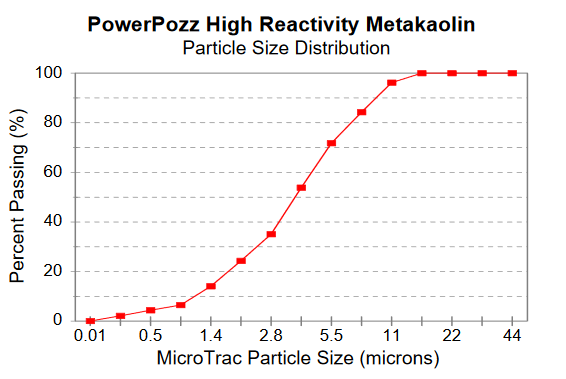
The PowerPozzTM PSD is illustrated below:

The material is 99.9% finer than 16um, and has a mean particle size of 3um (as measured by MicroTrac laser diffraction granulometer method). The PSD of PowerPozzTM has been engineered with a range of OPC – based applications in mind. ACT has the ability to custom grind and classify to meet unique customer requirements.

All information, while provided in good faith , with every effort made to assure accuracy, is provided by Advanced Cement Technologies at no charge, and without warranty–express or implied. Data given, unless otherwise stated, are based on standard testing procedures which are available on request. Variations do occur in individual tests and the results stated herein cannot be taken as minima or maxima for specification purposes.

As we cannot anticipate all possible applications of our products, nor variations in manufacturing equipment, formulae, methods, or practices, we guarantee only that the products will meet the specifications of Advanced Cement Technologies at the time of sale. Advanced Cement Technologies reserves the right to change specifications should it become necessary to do so. The products are sold without without express or implied warranty, with all warrantees of fitness of purpose being disclaimed, and on the condition that the purchaser is responsible for the determination of the product’s suitability for a particular purpose.

Statements concerning the possible use of our products are not intended as recommendations for use. No liability is accepted for any infringements of any existing or future patents.

All products sold, unless otherwise stated, will be subject to the general sales conditions of Advanced Cement Technologies.